Dairy / Farms
Vertical farming
Compost
Green energy
Milk valorisation
Greenhouses
Finance / Capital Markets
Straja 1 Farm — Phase I operations
- Operations commenced March 2025
- Target: 1,800 cows by end of 2025
- Begin gradual herd build-up and milking routines
- Monitor daily milk output and feed efficiency
- Install initial automation / monitoring systems
Compost Facility — Vaidei (Unit 1)
- Construction and commissioning of first compost factory
- Capacity: 7,000 t/yr organic compost
- Process 40,000 t/yr of manure
- Install sorting line and packaging unit (5–40L bags)
- Launch B2B and B2C compost sales channel
- Begin voluntary carbon certificate process
Solar Panels — 3 farm sites
- Install solar on Apold, Cut, Lacto Agrar farms
- Rooftop installations on farm buildings
- Target: 80% electricity bill reduction across 3 sites
- Expected annual saving: ~€500K
- Reduce carbon footprint of operations
Wheatgrass — Pre-launch planning
- Secure financing and finalise technology partnerships
- Complete feasibility studies
- Develop financial & environmental impact projections
- Identify land and CO₂ integration requirements
- Prepare design for Cut 1 vertical farm unit
Milk Valorisation Research
- Begin in-depth analysis on water elimination from milk
- Research protein isolation from raw milk
- Explore fat, cream, butter, milk powder product lines
- Assess transport cost reduction potential via condensing
- Identify potential export markets: Greece, Italy, Bulgaria
Capital Markets & Governance
- Continue BVB AeRO listing obligations
- Publish 2025–2030 Development Strategy (May 2025)
- Begin preparation for IFRS reporting adoption (target 2026)
- Engage investors via teleconferences and presentations
Straja 1 Farm — Completion phase
- Scale herd to ~3,400 animals by year-end
- Reach approx. 100,000 L/day milk production
- Install milking robots in parlors (pre-cleaning + dipping)
- Aim for 50% reduction in manual labour for milking ops
CUT 2 Farm — Permitting & Construction start
- Complete land acquisition (started late 2025)
- Obtain all environmental & construction permits by early 2026
- Begin construction in second half of 2026
- Build barns, milking parlors, feed storage, waste systems
- Install two milking rotors (3 sessions/day design)
- Lay groundwork for solar panel integration
Straja 2 Farm — R&D & Land acquisition
- Initiate land acquisition for future Straja 2 site
- Begin research: investment planning & cost breakdown
- Study milking rotor configuration & automation needs
- Assess solar panel capacity requirements
- Evaluate manure valorisation & composting integration
Vertical Farming — Cut 1 unit (construction)
- Build vertical farm at Cut 1 farm site
- Install hydroponic racks and climate control systems
- Integrate CO₂ capture pipeline from biomethane prep
- Recruit and train operations staff
- Begin production at end of 2026: 20 t/day wheatgrass
- Start integration into Cut 1 cattle feed programme
Compost Facility — Cut 1 (Unit 2)
- Build second compost factory at Cut 1 farm site
- Doubles group capacity from 7,000 to 14,000 t/yr
- Process additional 40,000 t/yr of manure
- Install sorting line & packaging for B2C retail bags
- Expand voluntary carbon certificate programme
Laguna Project — Apold
- Install lagoon infrastructure at Apold farm
- Improve manure and liquid waste management
- Support circular economy and compost input quality
Dairy Product Diversification
- Finalise milk valorisation research (target Q1 2026)
- Proceed to implementation planning in Q2 2026
- Begin processing line investment planning
- Explore cream, fat, butter, milk powder product lines
- Identify bakery and food processor clients in EU
Capital Markets milestones
- Adopt IFRS reporting starting 2026
- Advance Main Market (BVB) upgrade preparations
- Biogas stake decision expected (10–20% minority equity)
Straja 1 Farm — Full operation
- Reach full capacity: 5,000 animals
- Daily milk production: 150,000 L/day
- Robots fully operational in milking parlors
- Compost and manure systems at full throughput
CUT 2 Farm — Milking & automation infrastructure
- Continue construction: milking parlors and automation fit-out
- Install robotic udder pre-cleaning and dipping systems
- Complete barn and feed storage infrastructure
- Solar panel installation for electricity self-sufficiency
- Prepare for first livestock arrival (late 2027)
- Phase 1: First group of dairy cows arrive late 2027
Biogas Facility — Entry decision & launch
- Partnership: DN Agrar + BSOG Energy (Black Sea Oil & Gas)
- Finalise stake acquisition decision (10–20% minority)
- Facility commissioned by end of 2027
- Initial capacity: up to 15 MW biomethane
- Raw material supply: manure from DN Agrar farms
- Secure 15-year offtake contract (revenue: €3.5–4M/yr)
- 90% reduction in associated carbon emissions
Solar Panels — Straja expansion
- Install solar on Straja farm rooftops
- Brings 4-farm solar saving to ~€700K/yr
- Reduce electricity dependency across expanded herd
Laguna Project — Cut 2
- Install lagoon infrastructure at Cut 2 site
- Supports manure management as herd begins to arrive
- Links into biomethane raw material supply chain
Straja 2 Farm — Permitting process
- Formal permitting process initiated for Straja 2
- Environmental and construction permit applications filed
- Continue R&D: operational design & milking efficiency study
- Final investment decision anticipated early 2028
Dividend & Main Market preparation
- Target dividend introduction in 2027 or 2028 post-biogas launch
- Advance BVB Main Market upgrade timeline (Q4 2026–Q1 2027)
- Consider share buyback programme implementation
CUT 2 Farm — Animal acquisition phase
- Phase 2: Herd scaled progressively to full capacity
- 5,000 dairy cows acquired internally from DN Agrar farms
- Estimated procurement cost: €7.5M (~€1,500/animal)
- Three milking sessions/day operational across herd
- Feed integration: 20–30% wheatgrass from vertical farm
- Manure processed through compost factory + biogas plant
Vertical Farming — Cut 2 unit (construction)
- Begin construction of Cut 2 vertical farm (end of 2028)
- Target: 20 t/day additional wheatgrass output
- Integrate CO₂ from biomethane plant (now operational)
- Install hydroponic racks and climate control for Cut 2
- Total group wheatgrass target: 40 t/day by 2029
Compost Facility — Cut 2 (Unit 3)
- Build third compost factory at Cut 2 farm
- Process manure from growing Cut 2 herd
- Add packaging capability (5–40L retail bags)
- Group compost capacity grows toward 28,000 t/yr target
- Generate ~16,000 voluntary carbon certificates/yr per unit
Laguna Project — Straja (Ohaba)
- Install lagoon at Straja farm (Ohaba site)
- Supports full-capacity manure management at Straja 1
- Feeds into compost and biogas supply chains
Biogas — First full year of operations
- First complete year of biomethane production
- Revenue: €3.5–4M/yr secured via offtake contract
- Option to expand facility to 20 MW+ assessed
- Manure supply logistics fully optimised across farms
Straja 2 Farm — Investment decision
- Final investment decision expected early 2028
- Decision contingent on market conditions and milk valorisation
- If positive: begin construction in 2028 for 2030 operations
- Capacity: 5,000 cows · 150,000 L/day · two milking rotors
- Straja 1+2 combined: 11,000 animals · 300,000 L/day
CUT 2 Farm — Full operational launch
- Full capacity reached: 5,000 dairy cows
- Three milking sessions/day at full throughput
- Daily output: 150,000 L milk
- Solar energy covers all farm electricity needs
- Group daily production now: ~450,000 L/day
- All circular economy systems (wheatgrass, compost, biogas) integrated
Vertical Farming — Vaidei / Lacto Agrar unit
- Build third vertical farm at Vaidei (Lacto Agrar)
- Target: 30 t/day wheatgrass at this unit
- Group wheatgrass total: approaching 70 t/day
- CO₂ integration from biogas plant extended to Lacto Agrar
- Monitor livestock performance and milk yield improvements
Greenhouse Complex — Phase I
- Construction begins: industrial-scale greenhouse (Phase I)
- Focus on leafy vegetables, brassicas, high-value crops
- Year-round production to address Romania's import dependency
- Target: premium pricing and high yield per m²
- Consumer-oriented — fresh produce for Romanian market
- Operations expected to start in 2030
Solar — Cut 2 expansion
- Solar panels installed across all Cut 2 farm buildings
- 5-farm solar portfolio brings annual saving to ~€900K/yr
- Full energy self-sufficiency at Cut 1, Cut 2, Apold, Straja, Lacto
BVB Main Market & dividends
- Main Market upgrade targeted Q4 2026–Q1 2027 (or 2027)
- First dividend payments targeted 2027–2028
- Share buyback programme under evaluation
- Free share allocation to shareholders considered
- EBITDA on track to more than double vs. 2025
Vertical Farming — Apold unit (final)
- Build fourth and final vertical farm at Apold
- Target: 30 t/day wheatgrass at Apold
- Group total: ~100 t/day wheatgrass across all farms
- 25% of total group feedstock from wheatgrass achieved
- Full circular CO₂ integration across all vertical farms
- Evaluate human-health product line (juices, supplements)
Greenhouse Complex — Phase II
- Phase II construction and expansion of greenhouse complex
- Scale vegetable production capacity significantly
- Phase I operations commence (construction completed 2029)
- Diversify into tomatoes, cucumbers, brassicas year-round
- Target export to Hungary, Poland, Bulgaria
- Position as first-mover in protected vegetable farming in Romania
Compost — Straja units (decision: +2 units)
- Decision to add 2 more compost units at Straja farm
- Supports Straja 1 (5,000 cows) and Straja 2 manure volumes
- Group compost capacity reaches 40,000 t/yr
- Group voluntary carbon certificates: ~100,000/yr
- Retail compost sales in 5L, 10L, 20L bags — Romania + EU
Straja 2 Farm — Operations begin (if approved)
- Operations commence if 2028 investment decision was positive
- Capacity: 5,000 cows · 150,000 L/day
- Straja 1+2 combined: 11,000 animals · 300,000 L/day
- Group daily production: 550,000 L/day
- Annual group production: ~200 million litres
Green energy — Full ecosystem
- Biogas at full capacity: 15–20 MW · €3.5–4M/yr revenue
- Solar on all 5–6 farms: ~€900K/yr electricity saving
- 100,000 voluntary carbon certificates/yr (15-year programme)
- Gold Standard certification for carbon credits in progress
- 90% reduction in carbon emissions vs. baseline
2030 Vision — Targets achieved
- 6 high-efficiency dairy farms producing 150–200M L/yr
- 40,000 t/yr organic compost sold in Romania + EU
- EBITDA more than doubled vs. 2025 baseline
- Consistent dividend payments and/or buyback programme
- Listed on BVB Main Market for multiple years
- Unveil 2030–2035 strategic roadmap
- Industrial cluster model assessed for replication regionally
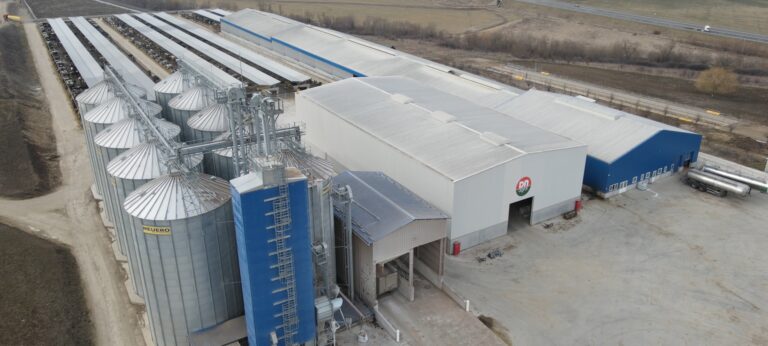
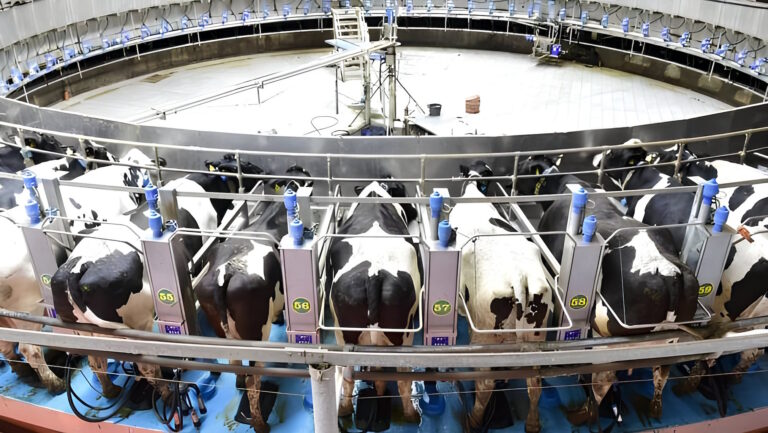
Straja FarmView project
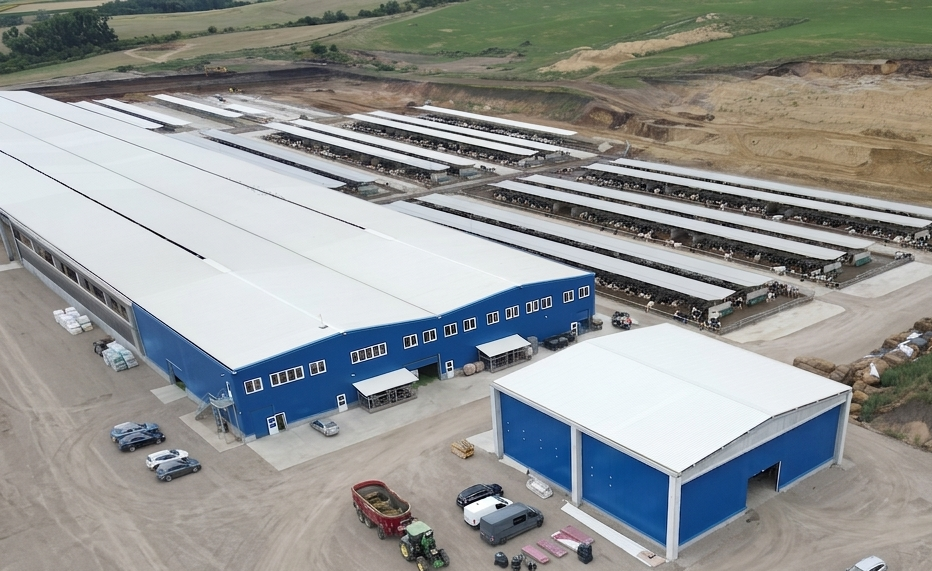
Investment: RON 42M invested Jan–Sep 2025 · Financing: Bank loan + own sources · ROI: Ongoing — revenue generating from 2025
Mar 2025
Phase I — Operations launch(completed)
- Farm operations officially commenced
- First animals stocked; milking routines established
- Staff hired and trained on milking parlor protocols
- Monitoring systems (health, yield) activated
Q2–Q4 2025
Herd build-up Phase I(completed)
- Progressive livestock procurement from partner farms
- Target: 1,800 cows on site by end of 2025
- Feed optimisation and ration monitoring initiated
- Automation systems (pre-cleaning robots) commissioned
- Solar panel installation on farm buildings begins
Q1–Q4 2026
Herd build-up Phase II(in progress)
- Scale herd to approx. 3,400 animals
- Daily production reaches approx. 100,000 L/day
- Robotic milking parlor upgrades (udder dipping + pre-cleaning)
- 50% manual labour reduction target for milking ops
- Compost facility (Vaidei) begins processing Straja manure
End 2027
Full capacity milestone(future work)
- Herd reaches 5,000 animals
- Daily milk output: 150,000 L/day
- All robotic systems fully operational
- Wheatgrass feed integration from vertical farm (Cut 1)
- Manure fully routed to compost + biogas supply chain
5,000 cows at full capacity150,000 L/day milkRobots: 50% labour savingCircular: compost + biogas integration
Total investment: €13–15M · Livestock: €7.5M (5,000 × €1,500) · Financing: €10M bank loan + own sources · Daily output target: 150,000 L/day
2025
Land acquisition & site preparation(completed)
- Identify and secure land parcel for Cut 2 site
- Assess water, utilities and road access requirements
- Commission environmental baseline study
- Engage legal and permitting consultants
Late 2025 – Early 2026
Permitting & planning phase(in progress)
- Submit environmental impact assessment (EIA)
- Apply for building and operational permits
- Finalise architectural and engineering design
- Secure all permits by early 2026
- Procure EPC (engineering, procurement, construction) contractor
H2 2026
Construction — civil & infrastructure(in progress)
- Break ground; civil works begin
- Construct barns, milking parlors, feed storage halls
- Build waste management and lagoon infrastructure
- Install utility connections (water, electricity, gas)
- Solar panels installed on all building rooftops
2027
Milking & automation fit-out(future work)
- Install two milking rotors (3 sessions/day design)
- Commission robotic udder pre-cleaning systems
- Commission robotic udder dipping sprayers (post-milking)
- Install feed management and herd monitoring software
- Conduct equipment testing and staff training
- Phase 1: First group of dairy cows arrive late 2027
2028
Animal acquisition & ramp-up(future work)
- Procure 5,000 cows internally from DN Agrar farm network
- Progressive stocking: herd builds through 2028
- Integrate 20–30% wheatgrass from Cut 2 vertical farm into rations
- Route all manure to Cut 2 compost factory and biogas plant
- Monitor and optimise milking yield per session
2029
Full operational launch(future work)
- Full capacity: 5,000 dairy cows
- Three milking sessions/day at full throughput
- Daily production: 150,000 L/day
- Solar energy covers all farm electricity consumption
- Group-level daily production: ~450,000 L/day
5,000 cows150,000 L/dayGroup total 450,000 L/daySolar self-sufficientCircular economy integrated
Investment: TBC — similar to Cut 2 (€13–15M) · Decision gate: Early 2028 · Condition: Market conditions + milk valorisation success
2026
Land acquisition & R&D kick-off(in progress)
- Begin land acquisition for potential Straja 2 site
- Commission investment planning and cost breakdown study
- Initiate research on milking rotor configuration (2 rotors)
- Assess solar panel capacity for full farm electricity
- Study manure valorisation and compost integration
2027
Permitting process & feasibility deepening(future work)
- File environmental and construction permit applications
- Conduct operational design study (barn layout, automation)
- Research biomethanisation integration from combined Straja 1+2 manure
- Evaluate circular economy synergies with Straja 1
- Prepare full investment case for board review
Early 2028
Final investment decision (FID)(future work)
- Board reviews full feasibility report
- Assess milk price and valorisation programme progress
- Evaluate financing availability (bank loan + EU subsidies)
- Go decision: construction begins 2028 for 2030 target
- No-go decision: project paused; land held as asset
2028–2029
Construction (if FID positive)(future work)
- Civil works, barn and milking parlor construction
- Install two milking rotors and automation systems
- Solar panels installed across all buildings
- Compost factory built for Straja 1+2 combined manure
- Lagoon and waste systems connected
2030
Operations begin(future work)
- First livestock arrive; herd build-up commences
- Straja 1+2 combined: 11,000 animals · 300,000 L/day
- Group daily total reaches ~550,000 L/day
- Annual group production: ~200 million litres
Conditional on FID 2028Straja 1+2: 11,000 animals300,000 L/day combinedGroup total 550,000 L/day
Vertical Farming – Wheatgrass ProductionView project

Investment: €3–4M · Financing: Bank loan · Payback: 10 years (~€400K/yr) · ROI: ~3 years operational
2025
Pre-launch phase — feasibility & design(completed)
- Secure financing (bank loan finalised)
- Finalise technology partner and equipment supplier selection
- Complete full feasibility study (yield, water use, energy)
- Develop financial and environmental impact projections
- Design CO₂ capture pipeline from biomethane prep works
- Obtain building permits for vertical farm structure
H1 2026
Construction & equipment installation(completed)
- Construct climate-controlled growing hall at Cut 1 site
- Install multi-tier hydroponic growing rack systems
- Commission LED lighting system (optimised grow spectrum)
- Install HVAC and humidity control systems
- Connect CO₂ supply from biomethane infrastructure
- Install water recirculation and nutrient dosing systems
- Recruit and train farm operations staff
H2 2026
Commissioning & first production(completed)
- Run pilot grow cycles (7–10 day wheat seed-to-harvest)
- Calibrate yield, nutrient levels and CO₂ dosing
- Quality testing: protein, chlorophyll and enzyme content
- Begin integration of wheatgrass into Cut 1 herd rations
- Monitor cow health, digestion and milk yield response
End 2026
Full production — 20 t/day milestone(in progress)
- 20 t/day wheatgrass output achieved at Cut 1
- Replaces 20–25% of external feedstock for Cut 1 herd
- Water usage verified at <10% of equivalent field crop
- Zero pesticides / herbicides — clean feed confirmed
- Performance data captured for Cut 2 scaling decisions
20 t/day wheatgrass25% feedstock replacementCO₂ integration95% water saving vs field
Vertical Farming – Wheatgrass ProductionView project
Investment: €3–4M · Financing: Bank loan · Output: 20 t/day (doubles group to 40 t/day)
End 2028
Construction start(future work)
- Procure equipment based on Cut 1 proven specifications
- Begin construction of growing hall at Cut 2 site
- Install hydroponic racks, LED systems and HVAC
- Connect CO₂ supply (biomethane plant now fully operational)
H1 2029
Commissioning & ramp-up(future work)
- Run grow cycles and calibrate systems
- Integrate into Cut 2 cattle feed programme
- Scale to 20 t/day full production
- Group wheatgrass total now 40 t/day
2029
Full operation — group capacity doubled(future work)
- Group wheatgrass capacity: 40 t/day across Cut 1 + Cut 2
- 25% of group-level feedstock now from vertical farms
- Evaluate scalability model for Vaidei and Apold units
40 t/day group totalFeedstock independence growing
Vertical Farming – Wheatgrass ProductionView project
Investment: €5–6M (larger unit — 30 t/day) · Financing: Subsidies + own sources + capital increase
H1 2029
Design, permits & procurement(future work)
- Finalise design for larger 30 t/day unit (scaled from Cut 1+2)
- Obtain building permits for Vaidei site
- Procure expanded equipment and rack systems
- Apply for EU subsidy financing package
H2 2029
Construction & installation(future work)
- Build larger growing hall at Lacto Agrar (Vaidei)
- Install expanded rack configuration for 30 t/day output
- CO₂ integration from biogas extended to this site
- Train operations team using Cut 1/2 protocols
2030
Full production(future work)
- Produces 30 t/day wheatgrass for Lacto Agrar herd
- Group wheatgrass total now ~70 t/day
- Monitor cow health, yield improvement and feed cost reduction
30 t/day at Lacto Agrar~70 t/day group total
Vertical Farming – Wheatgrass ProductionView project
Investment: ~€5–6M · Financing: Subsidies + own sources + capital increase · Target: ~100 t/day group total
H1 2030
Build & install(future work)
- Replicate Vaidei design at Apold site
- Construct growing hall; install all systems
- Commission CO₂ integration from biogas network
- Staff trained using established operational playbook
H2 2030
Production & group milestone(future work)
- Apold unit at 30 t/day
- Group total: ~100 t/day wheatgrass across all four farms
- 25% of total group feedstock from wheatgrass achieved
- Evaluate human-health product diversification (juices, supplements)
- Assess replication model for regional expansion
~100 t/day group total25% feedstock target metHuman-health products explored
Compost FactoriesView project
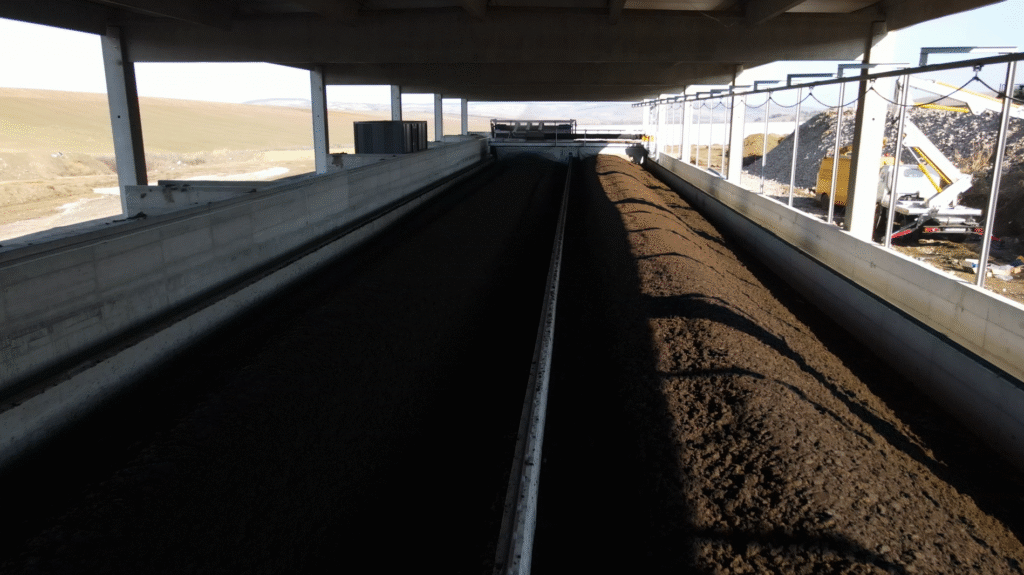
Per unit: €1.7M · Capacity per unit: 7,000 t/yr compost · 40,000 t/yr manure · Carbon certs: ~16,000/yr/unit · Payback: 10 years ~€170K/yr
2025
Unit 1 — Vaidei (compost launch)(completed)
- Construction and commissioning of first factory
- Install sorting line and packaging unit (5–40L bag formats)
- Capacity: 7,000 t/yr compost from 40,000 t/yr manure
- Launch B2B (big bags) and B2C (retail bags) sales channels
- Begin voluntary carbon certificate application process
- Apply for Gold Standard certification (5-year process)
2026
Unit 2 — Cut 1 (capacity doubled)(in progress)
- Build second factory at Cut 1 farm site
- Group capacity: 14,000 t/yr compost
- Install sorting and packaging (same spec as Vaidei)
- Expand voluntary carbon certificate programme
- Begin generating carbon certificate revenue stream
- Develop EU retail distribution channel for bagged compost
2028
Unit 3 — Cut 2 (group reaches 21,000 t/yr)(future work)
- Build third factory at Cut 2 site (manure from growing herd)
- Group capacity: 21,000 t/yr compost
- Group carbon certificates: ~48,000/yr
- All units equipped with sorting + packaging lines
2030
Units 4+5 — Straja (decision: +2 units)(future work)
- Decision to add two units at Straja farm for Straja 1+2 manure
- Group capacity reaches target: 40,000 t/yr
- Group voluntary carbon certificates: ~100,000/yr (15-yr programme)
- Retail sales Romania + EU (5L, 10L, 20L bags)
- Gold Standard certification pursued for premium credit value
40,000 t/yr compost by 2030100,000 carbon certs/yrB2B + B2C retail salesCircular economy: zero manure waste
Energy Efficiency Through Solar PowerView project
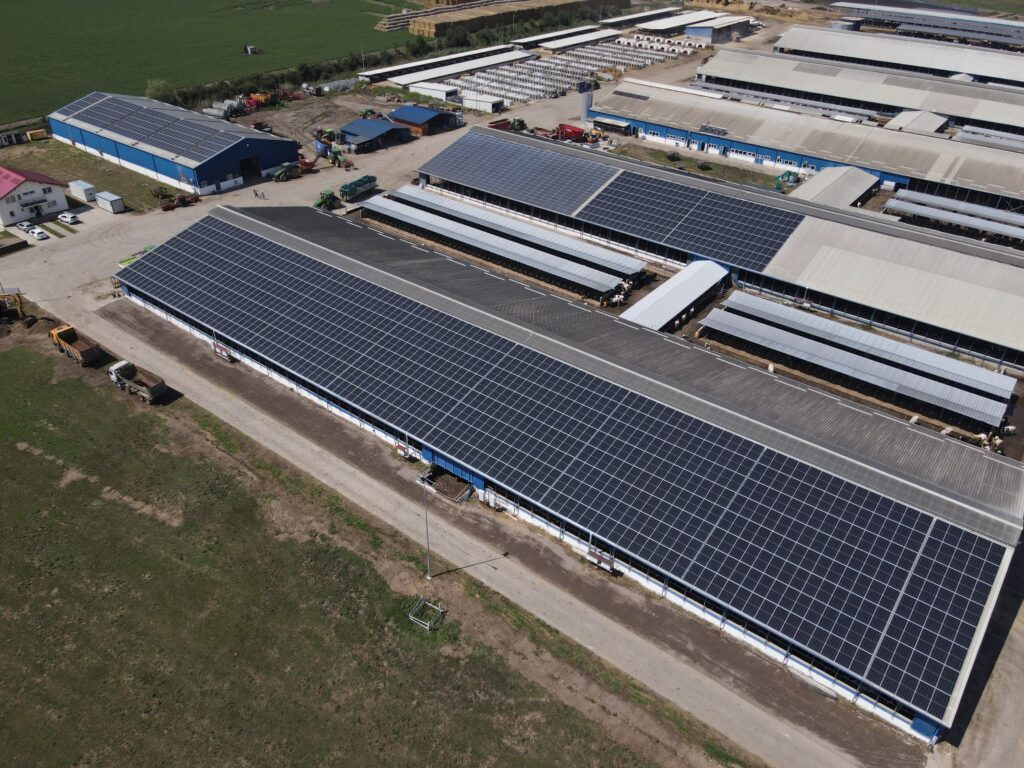
Goal: 80% reduction in electricity bills per farm · Financed: From loan facility · Annual saving 5 farms: ~€900K/yr
2025
Wave 1 — Apold, Cut 1, Lacto Agrar(completed)
- Structural survey of all farm buildings (roof load capacity)
- Procure solar panels and inverters; engage installation contractor
- Install rooftop panels on Apold, Cut 1, Lacto Agrar buildings
- Connect to farm electrical grid; commission monitoring
- Annual electricity bill saving: ~€500K
2027
Wave 2 — Straja farm addition(future work)
- Install solar on all Straja 1 farm building rooftops
- Scale system to match growing herd electricity demand
- 4-farm annual saving now ~€700K
- Feed surplus energy data into biogas plant planning
2029
Wave 3 — Cut 2 farm (complete rollout)(future work)
- Install solar on all Cut 2 farm buildings (integrated during construction)
- 5-farm full solar portfolio operational
- Annual electricity saving: ~€900K
- Evaluate Straja 2 solar requirements for 2030 construction
5 farms solar-equipped~€900K/yr electricity saving80% bill reduction per farm
Partnership for a biomethane production projectView project
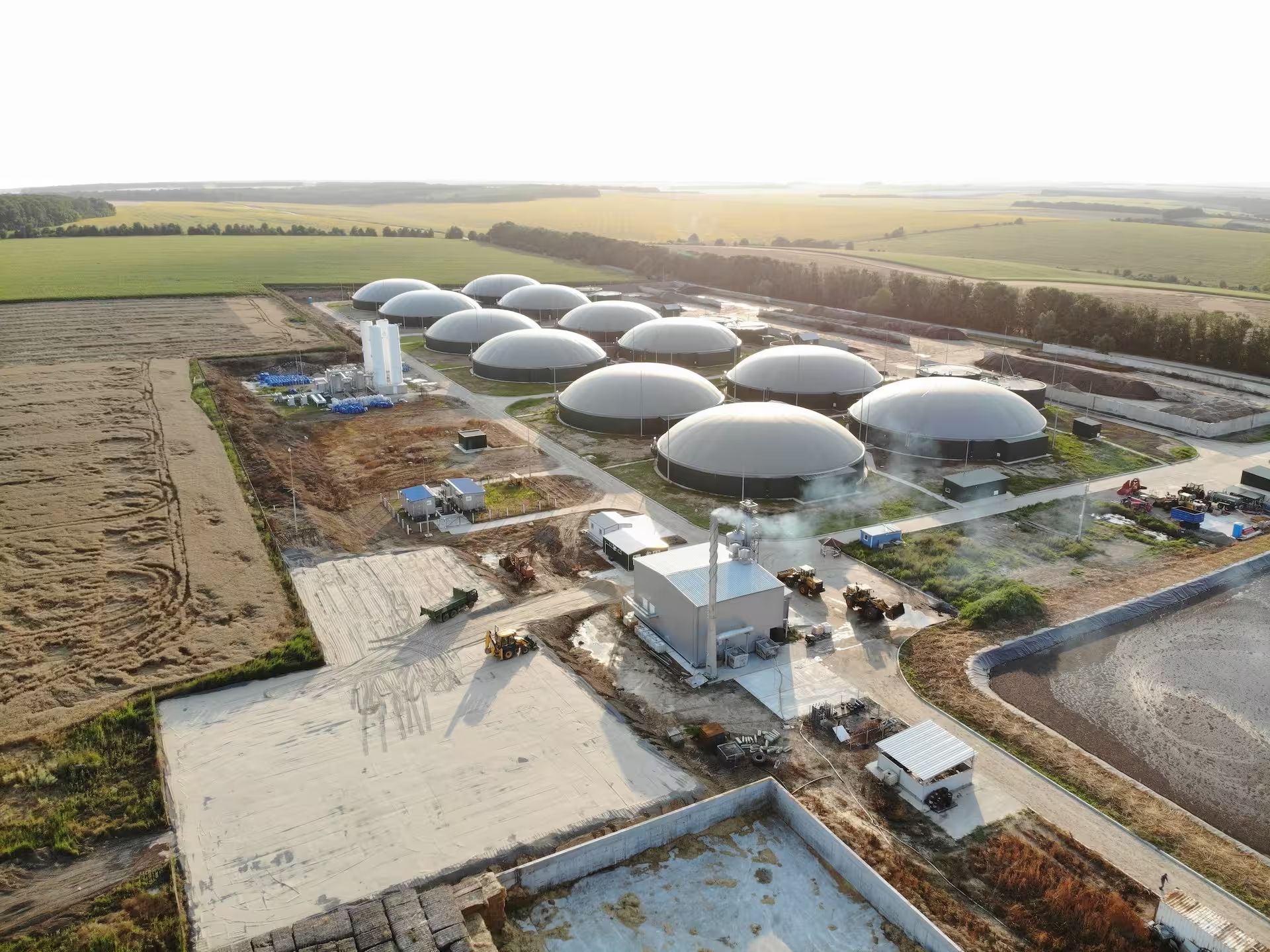
DN Agrar role: Raw material supply (manure) + logistics · Revenue: €3.5–4M/yr on 15-yr offtake · Capacity: 15 MW initial, expandable to 20 MW+
2025–2026
Partnership structuring & stake decision(in progress)
- Negotiate partnership terms with BSOG Energy (Black Sea Oil & Gas)
- Assess minority stake acquisition (10–20% equity option)
- Board decision on equity participation in 2026
- Finalise 15-year offtake contract terms
- Structure manure supply logistics from all farms
- Engage regulatory counsel for biomethane grid injection permits
2026–2027
Facility construction (BSOG-led)(in progress)
- BSOG leads EPC procurement and construction
- DN Agrar supplies manure logistics infrastructure (lagoons, tankers)
- Install anaerobic digestion vessels and gas upgrading units
- Build grid injection connection to Romanian gas network
- Commission CO₂ capture pipeline to Cut 1 vertical farm
End 2027
Facility commissioned — first gas production(future work)
- First biomethane produced and injected to grid
- 15-year offtake contract activated
- Annual revenue: €3.5–4M
- Carbon emission reduction: 90% vs manure without processing
- Enables dividend discussions for 2028 payment target
2028 onwards
Full operations & scale assessment(future work)
- First full year of biomethane operations
- Assess expansion from 15 MW to 20 MW+
- CO₂ supply to Cut 1 and Cut 2 vertical farms running
- Track against Romania's 5% biomethane target for 2030
€3.5–4M/yr revenue15-year offtake secured90% emission reductionCO₂ feeds vertical farms
Investment: TBA after feasibility completion · Target: Higher margin per litre vs. raw milk sale · Markets: Greece, Italy, Bulgaria + EU bakeries/food processors
2025
Research Phase I — Water elimination & concentration(completed)
- Commission in-depth analysis on removing water from milk
- Assess evaporation, membrane filtration and spray-drying technologies
- Model transport cost reduction from concentrated products
- Map potential export routes to Greece, Italy, Bulgaria
- Identify GMO-free milk certification requirements
2025–2026
Research Phase II — Protein isolation & value-added products(in progress)
- Research protein isolation process (whey protein powder)
- Analyse butter and milk fat extraction processes
- Assess cream separation for industrial applications
- Identify bakery and food processor client segments (EU)
- Model margin uplift: raw milk vs. processed products
Q1 2026
Feasibility study completion(completed)
- Consolidate all research into investment feasibility report
- Present product line options to board (cream, fat, powder, protein)
- Model 3-5 scenarios for margin improvement per litre
- Identify facility location and processing line CAPEX
Q2 2026
Investment decision & implementation launch(in progress)
- Board decision: proceed with processing line investment
- Secure financing (bank loan + potential EU subsidies)
- Procure processing equipment (evaporators, separators, dryers)
- Begin facility construction or adaptation
- Initiate client pipeline development in target export markets
2027+
Processing operations & market development(future work)
- Launch cream and skimmed milk product lines
- Export concentrated dairy products to Southern and Eastern Europe
- Develop whey protein powder sales to bakeries and food manufacturers
- Track margin per litre improvement vs. raw milk benchmark
Higher margin per litreExport to Greece, Italy, BulgariaBakery + food processor clients
Phase I CAPEX: €3–4M · Total (Phase I+II): ~€6M · Financing: Subsidies + own sources + capital increase · Target: Year-round premium vegetable production
2025–2027
Market research & concept design(in progress)
- Analyse Romania's vegetable import dependency (leafy greens, brassicas, tomatoes)
- Assess protected cultivation opportunity (Romania: only ~10% of veg under cover)
- Identify high-ROI crop categories: lettuce, brassicas, cucumbers
- Select greenhouse technology model (Venlo, multi-span, vertical-hybrid)
- Map subsidy funding availability (PNRR, EU rural development)
- Identify site location (proximity to logistics and farm infrastructure)
2028
Phase I — Planning, permits & construction start(future work)
- Finalise Phase I greenhouse design (crop-specific layout)
- Submit environmental and building permit applications
- Procure greenhouse structure, climate control and irrigation systems
- Begin Phase I construction
- Set up composting integration (compost as growing medium/fertiliser)
2029
Phase I — Construction completion & Phase II start(future work)
- Complete Phase I greenhouse structure and systems installation
- Commission climate control, irrigation and crop monitoring systems
- Hire and train horticultural operations team
- Begin Phase II construction (expanded capacity)
- Set up year-round growing calendar (crop rotation plan)
2030
Phase I operations + Phase II completion(future work)
- Phase I greenhouse begins full year-round production
- Phase II construction completed; ready for operations
- Target crops: leafy greens, brassicas, tomatoes, cucumbers
- Premium pricing vs. imports; high yield per m²
- Supply Romanian retail market and export to Hungary, Poland, Bulgaria
- Integrate ESG: own compost as growing medium, solar energy on rooftops
Year-round vegetable supplyReduces Romania import dependencyExport: HU, PL, BGFirst-mover in protected cultivation