
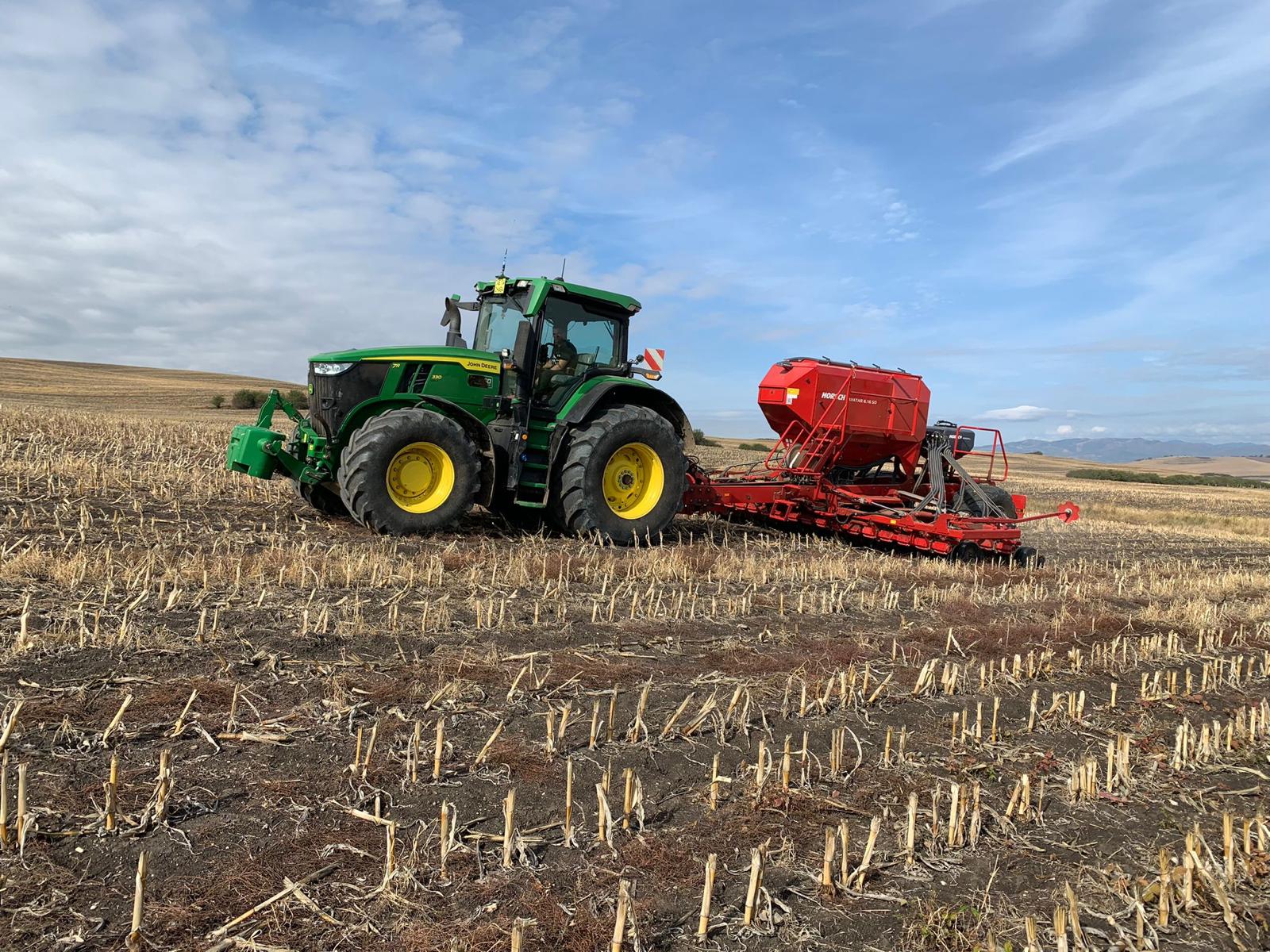
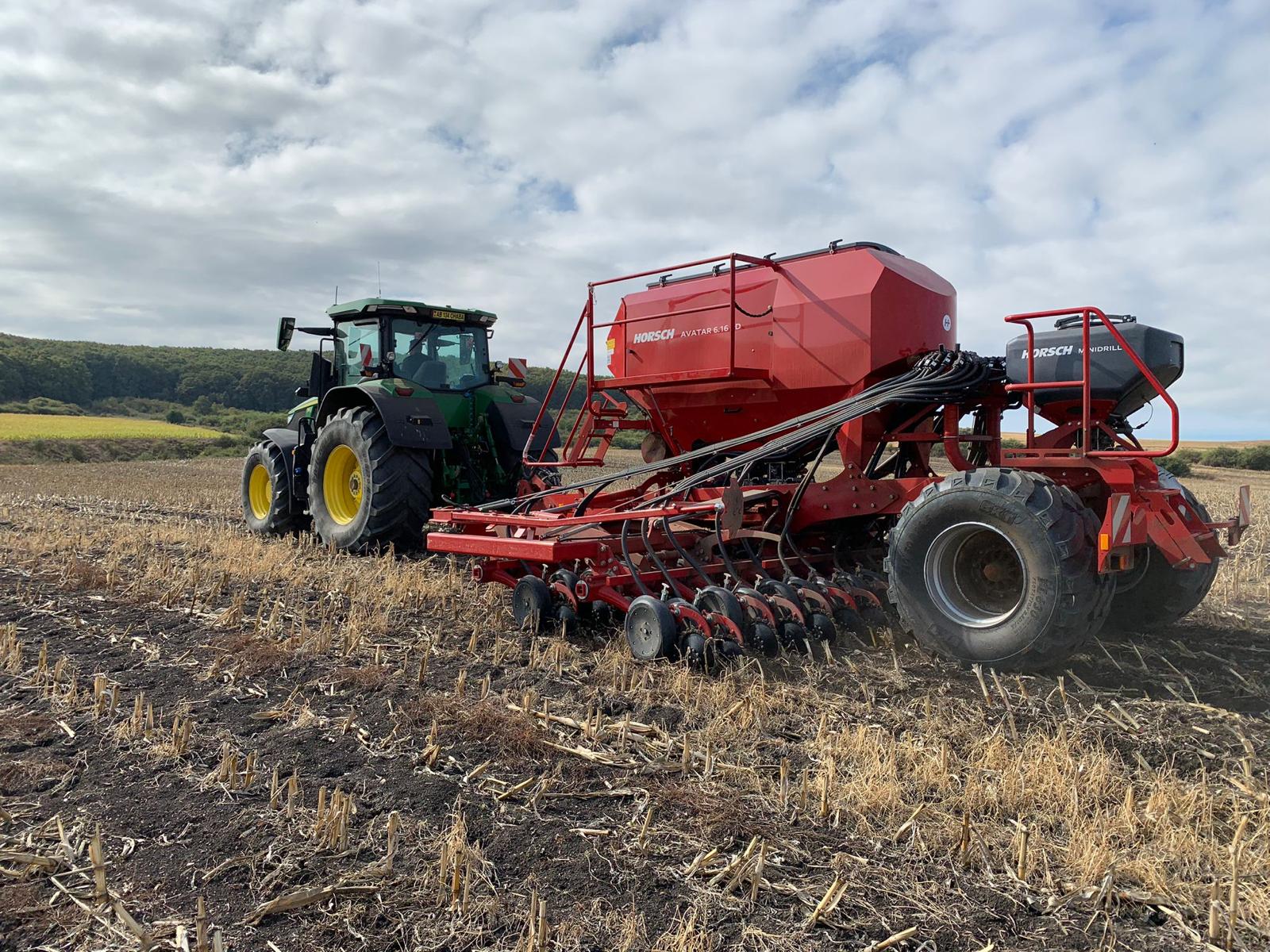
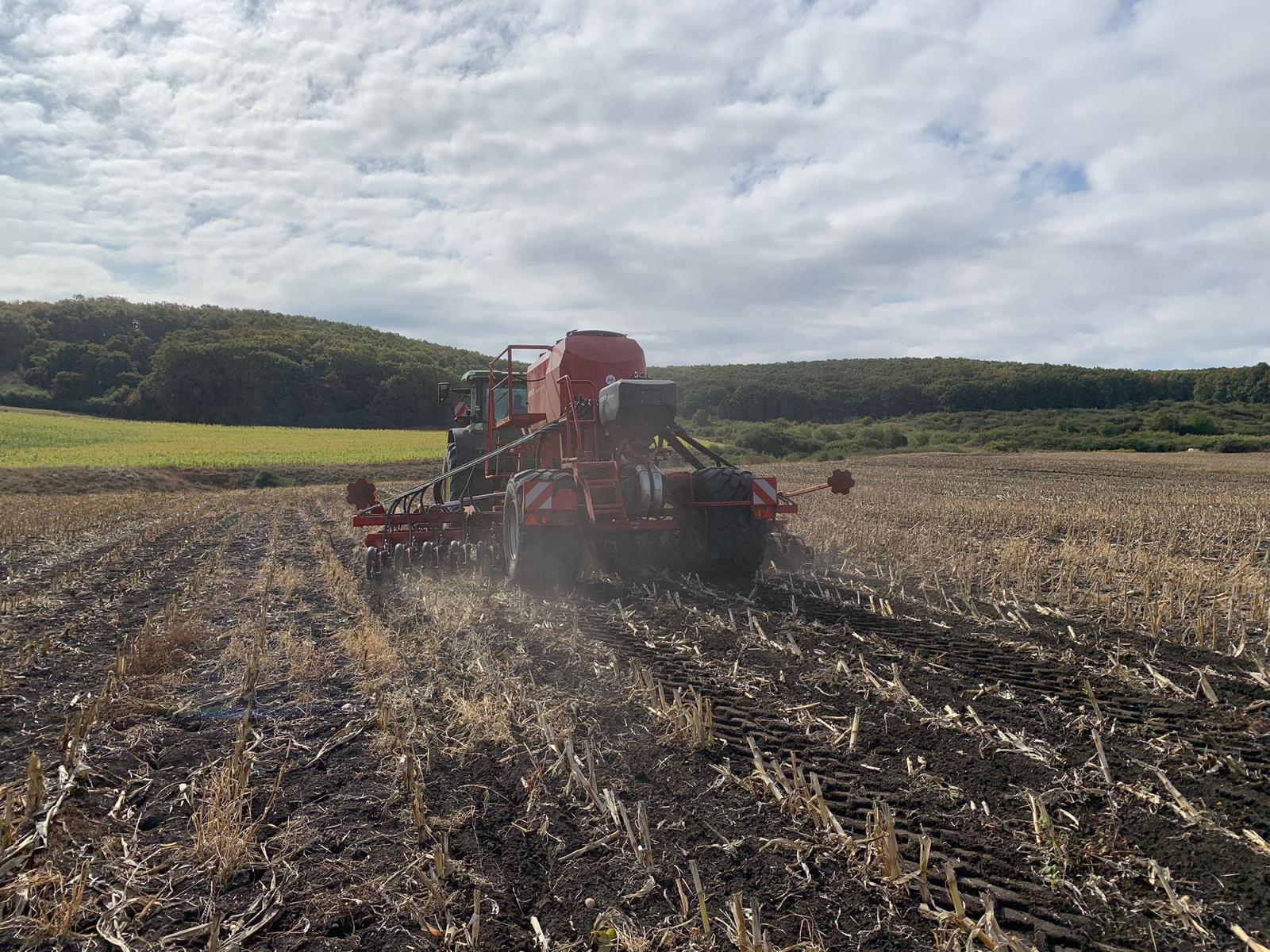
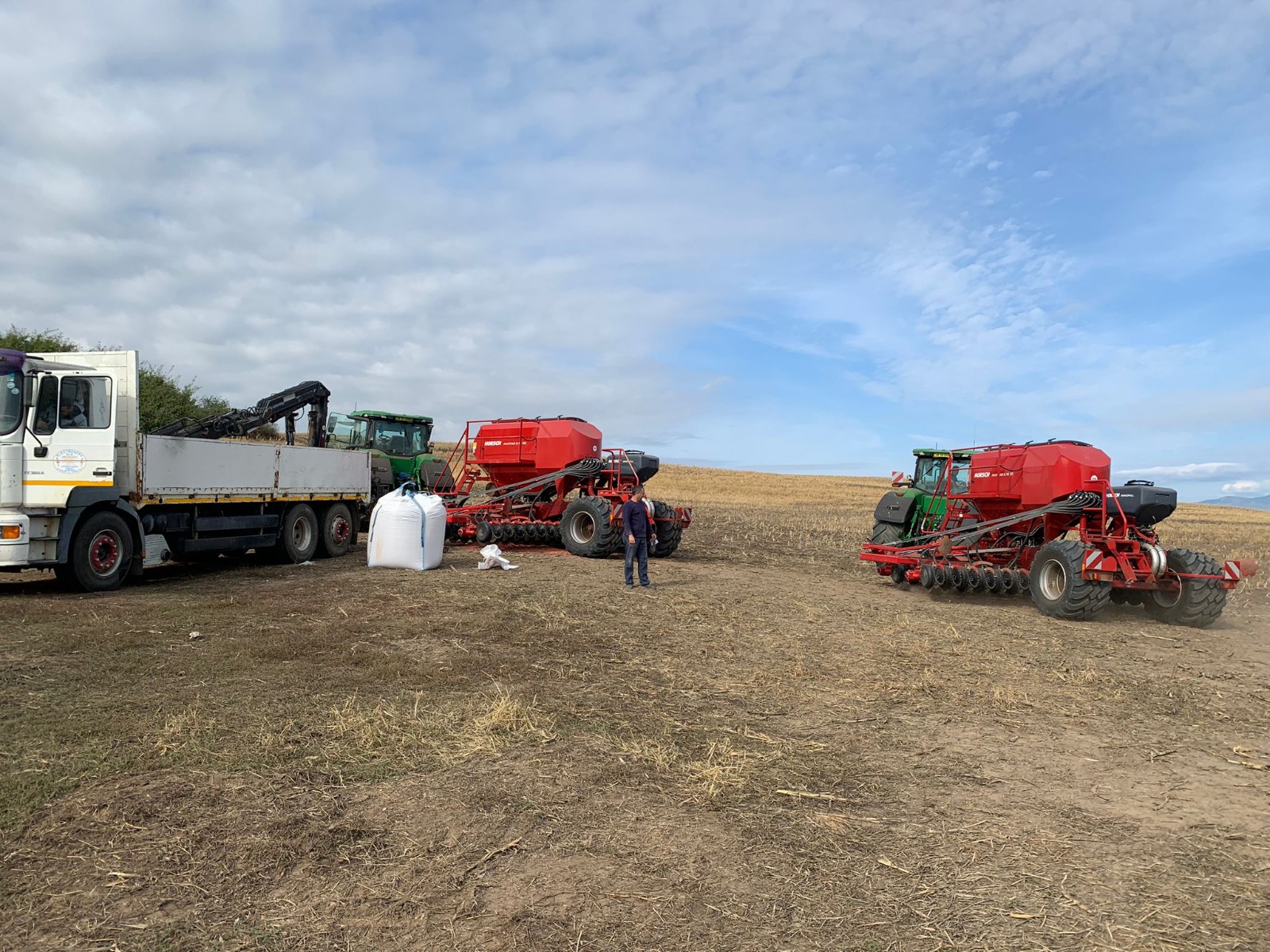
DN AGRAR applies modern soil conservation technologies across its agricultural operations through the implementation of no-till and minimum-till farming practices. These methods represent an important step toward environmentally responsible agriculture, supporting both soil health and operational efficiency.
Over recent years, the company has invested more than EUR 550,000 in advanced machinery and equipment to support these technologies. As a result, beginning in 2025, no-till and minimum-till practices have been extended to all cultivated areas, allowing DN AGRAR to optimize soil management and agricultural productivity.
Key benefits
Soil moisture conservation
By minimizing soil disturbance and maintaining crop residues on the surface, these technologies help retain soil moisture. This is particularly important during periods of rainfall deficit and temperature variability, when preserving available water becomes critical for crop survival.
Climate resilience
During challenging climatic conditions, such as drought, conservation tillage helps mitigate negative impacts on yields by maintaining soil structure and reducing evaporation.
Reduced operational costs
Fewer field operations are required compared to conventional tillage systems. This leads to:
- Lower fuel consumption
- Reduced machinery wear
- More efficient use of labor and equipment
Improved soil health
Maintaining soil structure and organic matter contributes to:
- Better nutrient cycling
- Improved soil biodiversity
- Long-term soil fertility
How the technology works
No-till and minimum-till systems reduce the intensity of soil disturbance compared to traditional plowing methods.
Minimum-till
Limits soil cultivation to shallow or partial operations, preserving soil structure while preparing the seedbed.
No-till
Eliminates plowing entirely, allowing crops to be sown directly into the previous crop residue.
In years marked by climatic challenges, including rainfall deficits and temperature fluctuations, DN AGRAR has leveraged no-till and minimum-till practices as part of its risk-management strategy. These soil conservation measures support stable production while ensuring the availability of essential fodder resources for the company’s livestock operations.
These practices simplify key agricultural processes, including land preparation, sowing, and fertilization, while maintaining the integrity of the soil ecosystem.
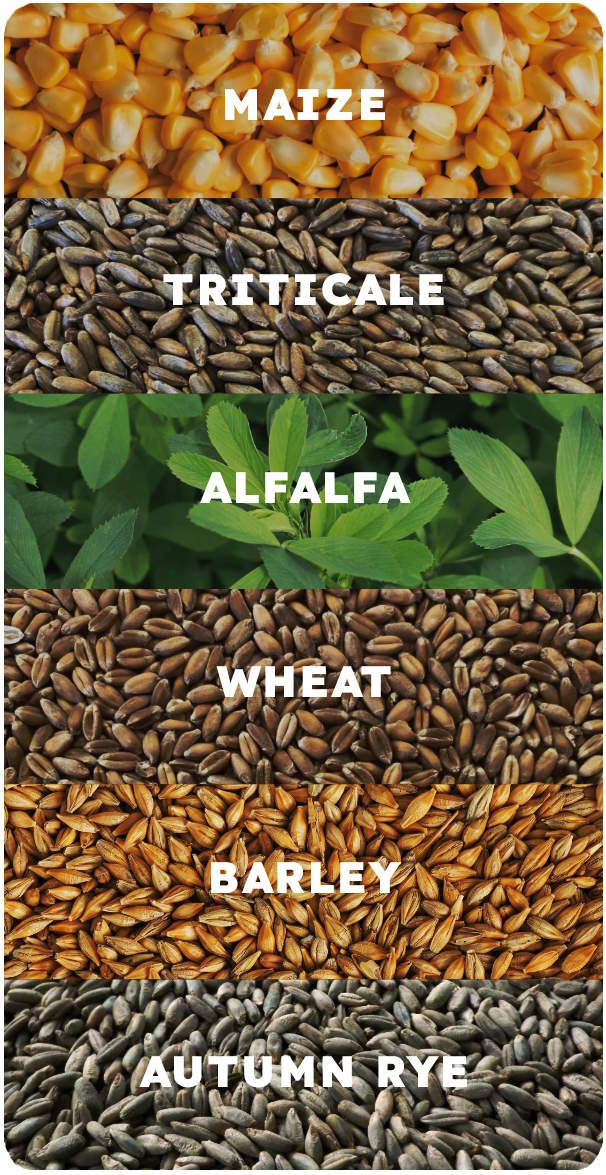
The crops established by DN AGRAR.
Supporting sustainable agricultural production
Through continued investment in modern agricultural technologies, DN AGRAR remains committed to sustainable land management, efficient resource use, and long-term agricultural resilience.

